
(Even When They’re Wiggly, Wild, or Just Not in the Mood)
As a family yoga teacher and a parent myself, I know firsthand that calming practices with kids can be… well, not always calm.
Sometimes they’re bouncing off the walls.
Sometimes they’re struggling in someway.
And sometimes, they’re just not in the headspace for a deep breath — and honestly, neither am I.
But that’s the beauty of this work. It’s not about forcing or faking calm. It’s about creating space for it. Not just in tough moments – but consistently.
It’s about practicing together.
It’s about choosing connection over control and to do lists.
I am always saying practice calming practices at calmer times but what I don’t mean by this is that your child is really calm – what I mean is a time when they are regulated so not struggling with big emotions or when they’re overtired or had a hard day. So not necessarily calm, but maybe playful, happy even.
Here are three ways I make calming practices actually fun (and effective) — for both my children and myself:
1. I Don’t Force Calm — I Support It
Trying to get a child to “calm down” on demand often leads to the opposite. (You’ve probably seen it or felt it in action.)
So instead of commanding calm, I focus on making it inviting.
That means holding space, not pressure.
I use playful breath games, invite them to join me rather than insist on it, and let them know it’s okay to feel how they feel — the breath is here to help when they’re ready.
We’re not trying to “fix” them — we’re helping them feel safe enough to regulate, safe enough to feel, process and move through different emotions.
2. I Meet Their Energy Where It Is
Before we settle into stillness, I ask:
🌀 Where is your energy right now? What does your body need in this moment?
Some kids need grounding. Others need to shake things out before they can land in their body properly.
That’s why I’m not afraid to get really energetic and wild sometimes before calming time. Sometimes it’s what is needed. And other times that is just going to make them even more wild – it’s a very delicate balance! Haha.
Movement becomes the bridge to calm.
We don’t aways start in stillness. We can move toward it.
3. I Practice With Them — Not At Them
This is big. Calming practices aren’t something I deliver like a lecture. They’re something I live, model, and share.
That means:
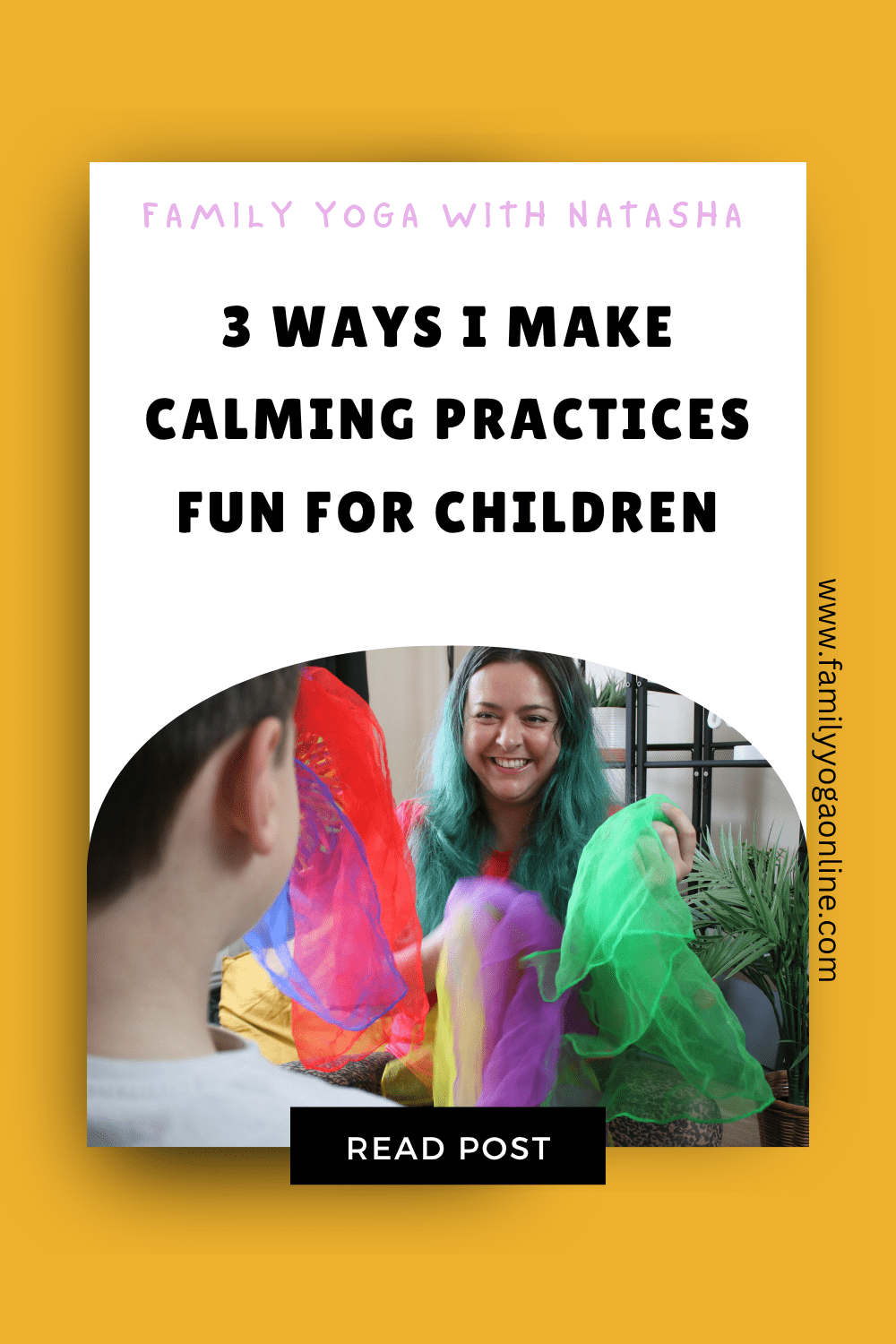
🧸 Using props and visuals to bring the practice to life (like teddies, pom poms or sensory scarves)
🎨 Following their ideas — what calming practice would they like today?
🤝 Staying present with them in the moment, not trying to control the outcome
I see myself as a co-regulator. There are obviously differences when I am working with a big group in a school and when I am practicing with my own children but I always try to be really with them.
I’m not above them — I’m beside them (this is also why I love practicing in circles when possible, I’m just another person there in the circle with them).
Why Making It Fun Matters
When calming practices are fun, they become memorable.
When they’re playful, they feel safe.
This matters because emotional regulation isn’t just about techniques — it’s about relationship and repetition. If a child enjoys the practice, they’re more likely to return to it — especially when they actually need it.
By turning regulation into connection, creativity, and shared joy, we help our children build a healthy relationship with their feelings, rather than feeling like emotions are “wrong” or “too much.”
We’re teaching them — gently and consistently — that it’s okay to feel everything, and that they have tools to come back to calm, again and again.
Making it fun is not just “cute” — it’s neuroscience, it’s strategy, and it’s the heart of emotional resilience.
Consistency, Connection, and Curiosity
We don’t need to do it perfectly. We just need to show up — with love, creativity, and presence.
These tiny moments of practice, shared together, create something powerful over time:
A child who knows their breath can be their anchor.
A parent who feels less reactive and more able to hold space.
A relationship built on co-regulation and mutual respect.
📥 Want to try this with your child?
Download my free guide:
“5 Must-Know Breathing Practices for Kids” — fun, effective tools you can use together in under 5 minutes.
Because calm doesn’t have to be complicated — just practiced with heart.
Watch Next:
The 10‑Minute Bedtime Bridge That Transforms Chaotic Evenings into Calm
Because stressful nights don’t need to end in battles (or guilt). Real Talk: Messy Bedtimes Happen Let’s be honest… I am not the mum who has her evenings perfectly organised, where the kids calmly go to bed at 7 p.m. and I get this magical “me time” after. Nope. Sometimes it’s 9 p.m. and no one’s in…

I don’t always want to practice Yoga with my Children
This might surprise you, especially coming from someone who talks about yoga together sooo much, but I don’t always want to practice yoga with my children. And sometimes… they don’t want to practice with me either. The other day, I rolled out my mat ready for my own practice. And like a moth to a…
Why “Just Take a Deep Breath” Often Doesn’t Work (And What Actually Helps)
“Take a deep breath.” It’s one of the most common pieces of advice we hear…. to support children and ourselves, told to anyone who looks overwhelmed, angry or having a tough time. And while it’s usually said with care, compassion, and good intention… it so often falls flat. You’ve probably seen it.You suggest a deep…
 Family Yoga with Natasha
Leave a comment