If you haven’t caught the previous posts about the Kosha Series here are the links for previous articles:
- What are the Koshas? Understanding these 5 layers will help support your families well-being! (1/5)
- The Kosha Series – An introduction to Pranamayakosha (2/5)
- How are you feeling? The Manomayakosha (3/5)
Today, I was making pancakes and my kids were shouting for me to come upstairs and see what the cat what doing. I said I couldn’t and they came down and really wanted me to see. So my eldest took over the pancake (something he really enjoys making and has managed to make many times with me now). When I came back down, he was upset because ‘he ruins everything.’ and the pancake had gone all wrong. The thing is, it was nothing he did, that pancake was the first of the batch and was already not amazing, but he immediately went really hard on himself and went off upset.
A valuable lesson from the Vijnamayakosha emerges here: the importance of self-compassion and understanding. When my eldest child became upset and blamed himself for the perceived failure of the pancake, it highlighted how easily children, and even adults, can be harsh critics of themselves. This tendency to internalize perceived shortcomings or mistakes can stem from a lack of self-confidence and an overemphasis on external validation.
The Vijnamayakosha invites us to cultivate higher wisdom and intuition, which includes recognizing our inherent worth and embracing imperfection as part of the human experience. Instead of berating himself for the pancake mishap, my child could benefit from understanding that mistakes are opportunities for growth and learning. By practicing self-compassion and reframing negative self-talk, he can develop resilience and a healthier relationship with himself.
As parents, we play a crucial role in nurturing our children’s wisdom body by modeling self-compassion and offering gentle guidance in moments of self-doubt. Encouraging them to treat themselves with kindness and understanding fosters emotional resilience and empowers them to navigate life’s challenges with greater ease. Ultimately, the lesson from the Vijnamayakosha teaches us that self-acceptance and compassion are essential ingredients for cultivating inner wisdom and leading a fulfilling life.
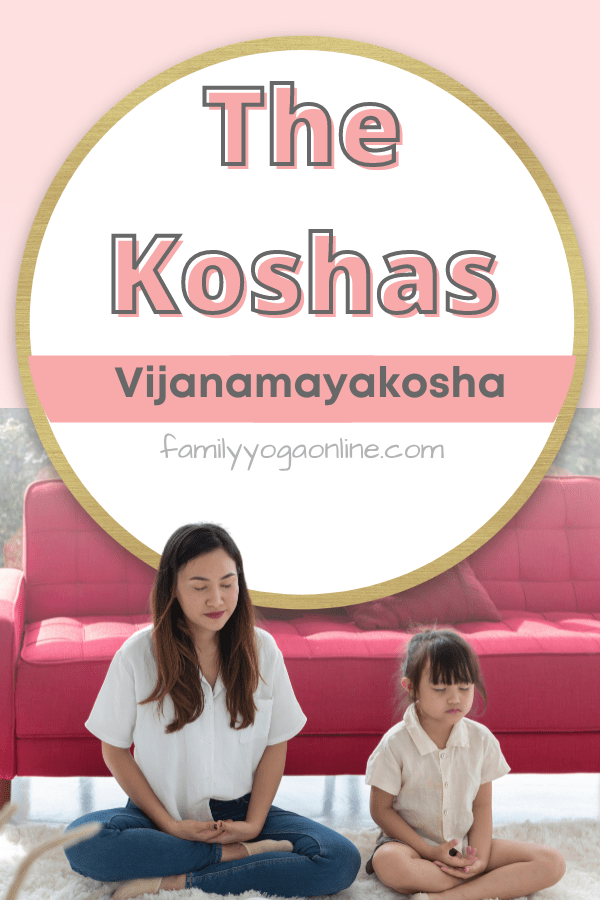
When we are working with Vijanamayakosha with our children it’s very much about empowering them to trust themselves, to release limiting beliefs and to connect with their intuition.
Empowering children to trust their instincts and inner wisdom lays a foundation for confident decision-making and self-expression. Through yoga practices that encourage mindfulness and introspection, we create opportunities for children to connect with their inner guidance system and cultivate a deeper understanding of themselves and the world around them.
Incorporating activities that stimulate critical thinking, problem-solving, challenges and creative expression into our yoga sessions can further enhance the development of the Vijnanamayakosha in children. By engaging their intellect in playful and meaningful ways, we support their cognitive growth while fostering a sense of curiosity and wonder.

Want a fun practice you can do with your family today?
Download my free family yoga guide with practical tips and written instructions for a fun session for fun and connection! Get yours here.
Next week I will be sharing the final article in this series! All about the Anandamayakosha! Let me know if you’ve enjoyed this series by commenting below!

[…] body is not separate from the mind or spirit, it’s part of a larger system that includes the koshas…
[…] both feel when a big emotion comes: “I am feeling overwhelmed right now. I’m going to try bumblebee breath…
[…] terms of yoga it all comes down to the Kosha System. This is 5 layers of our being that…
[…] emotions feel overwhelming, simple breathwork—like extending my exhales or practicing Bee Breath (Bhramari)—helps shift my nervous system from fight-or-flight…
[…] To learn more about the Koshas check out this previous post: What are the Koshas? Understanding these 5 layers…
The 10‑Minute Bedtime Bridge That Transforms Chaotic Evenings into Calm
Because stressful nights don’t need to end in battles (or guilt). Real Talk: Messy Bedtimes Happen Let’s be honest… I am not the mum who has her evenings perfectly organised, where the kids calmly go to bed at 7 p.m. and I get this magical “me time” after. Nope. Sometimes it’s 9 p.m. and no one’s in…


I don’t always want to practice Yoga with my Children
This might surprise you, especially coming from someone who talks about yoga together sooo much, but I don’t always want to practice yoga with my children. And sometimes… they don’t want to practice with me either. The other day, I rolled out my mat ready for my own practice. And like a moth to a…
Why “Just Take a Deep Breath” Often Doesn’t Work (And What Actually Helps)
“Take a deep breath.” It’s one of the most common pieces of advice we hear…. to support children and ourselves, told to anyone who looks overwhelmed, angry or having a tough time. And while it’s usually said with care, compassion, and good intention… it so often falls flat. You’ve probably seen it.You suggest a deep…

 Family Yoga with Natasha
Leave a comment