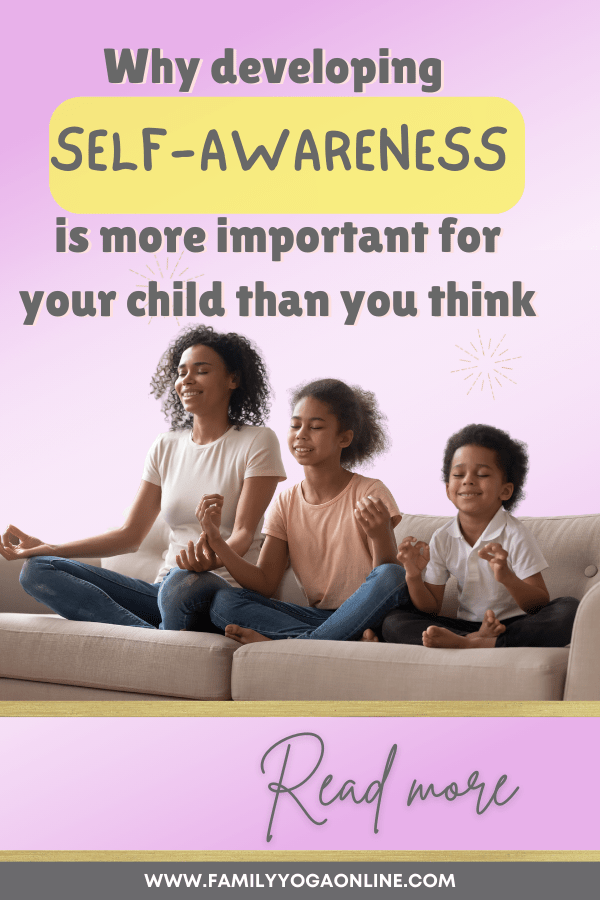
Ever wonder why your child’s emotional outbursts seem so intense and uncontrollable?
The answer might lie in their level of self-awareness.
Hi there, I’m Natasha, a parent of two wonderful, spirited children who, like many others, have their moments of struggle. And let’s be real, even I struggle sometimes. It’s not enough to just know calming practices; you have to practice self-awareness and recognize when you need to come back to those practices. Today, we’re diving into why teaching self-awareness to your child is a game-changer for managing stress and building emotional resilience.
The Foundations of Self-Awareness
So, what exactly is self-awareness? It’s the ability to recognize and understand your own emotions, thoughts, and behaviours. For children, developing this skill is crucial. It helps them better navigate their feelings, improves their social interactions, and enhances their learning abilities. When kids are aware of what they’re feeling and why, they can start to manage their emotions more effectively.
In the Calm Method, self-awareness is the cornerstone. It’s the first step in helping children manage stress and anxiety. Without self-awareness, it’s challenging for kids to use any calming techniques effectively because they can’t identify when they need them.
How to Teach Self-Awareness to Your Child
Practical Steps:
- Model Self-Awareness: Kids learn a lot by watching us. Show your own self-awareness by expressing your feelings and thoughts openly. If you’re feeling stressed, say it out loud: “I’m feeling a bit overwhelmed right now. I think I need a moment to breathe.” You don’t need to elaborate on the why and be careful to avoid placing blame. I think it’s very easy to say “You kids are stressing me out!” but that actually isn’t helpful. We have to accept that our stress is our own and our children (no matter how much they seem to be pressing our buttons) are not responsible for how we feel.
- Create a Routine: Establish regular times for self-check-ins, such as after school or before bed. Ask your child how they’re feeling and what’s on their mind.
- Use Tools: Introduce journals, mood charts, or feeling wheels to help children identify and express their emotions. These tools can make abstract feelings more concrete and understandable.
The Role of Yoga Poses in Enhancing Self-Awareness
Yoga isn’t just about flexibility or stretching; it’s about connecting with your body and becoming more aware of physical sensations and fluctuations in the mind. This connection helps kids recognize how their body feels when they’re stressed versus when they’re calm. It helps them to recognize when their mind is busy and identify negative thought patterns.
Simple Poses for Beginners:
Here are a few easy yoga poses to get started:
- Child’s Pose: A grounding pose that helps calm the mind.
- Tree Pose: Great for balance and focus.
- Mountain Pose: Encourages a strong and stable stance.
- Chair Pose: Offers a challenge which puts a small amount of stress on the body, allowing you to notice how that feels and breathe through the challenge/ stress.
Guided Practice:
Try a short, guided yoga practice with your child. Take a few breaths in each pose, focusing on how your body feels. Explore variations of the poses or use props, notice how this changes how the pose feels in your body. This practice can become a comforting routine that enhances self-awareness and calmness.
Breathing Techniques to Foster Self-Awareness
Controlled breathing anchors children in the present moment and heightens self-awareness. It’s a simple yet effective way to manage stress and emotions.
Simple Breathing Exercises:
Teach your child basic techniques like “Balloon Breath”
- Visualize your belly as a a balloon
- On the breath in, your balloon belly fills up and expands. Place your hands on your belly and notice how your belly fills up with air
- On the breath out imagine all the air releasing out of the balloon slowly
- Repeat for a few cycles of breath
Or try this simple practice of saying what you are doing. this is a great one for self-awareness and for helping ground into the present moment. It is one I use so often myself so I love sharing this with children too.
I simply say
- I am breathing in
- I am breathing out
And I repeat that as often as I need. I focus on my breath, giving me an anchor point. While I am doing this I may also begin to slow by breathing down, helping me to calm down and relax my body and mind.
Incorporating Breathwork:
Incorporate these exercises into daily routines. For instance, do a few rounds of Balloon Breath before bedtime or during a particularly stressful moment. Consistency will help these techniques become second nature.
Mindfulness Practices for Everyday Calm
Mindfulness helps children stay grounded and focused. It’s about paying attention to the present moment without judgment.
Simple Mindfulness Activities:
Engage in activities like mindful colouring, nature walks, gratitude practices or guided meditations. These practices can be both fun and relaxing for children.
Consistency is Key:
Make mindfulness a daily habit. The more regularly you practice, the more natural it will become, and the greater the benefits your child will experience.
Conclusion: The Long-Term Benefits of Teaching Self-Awareness
To recap, teaching self-awareness to your child is a powerful tool for managing stress and building emotional resilience. It’s the foundation of The Calm Method and a critical skill for lifelong well-being.
Start incorporating these practices into your daily routines. Remember, it’s not about perfection but about making progress and creating a supportive environment for your child to grow.
Learn the full Calm Method
If you’re ready to dive deeper into these techniques and support your child’s emotional well-being, join The Calm Method. Together, we can help your child build the skills they need to navigate stress and find their inner calm.
Final Thoughts
As a parent, I know the journey isn’t always easy. But by teaching self-awareness and practicing it ourselves, we can create a more peaceful and understanding environment for our children.
Practicing self-awareness offers so many benefits for children, especially when it comes to managing overwhelming emotions. By developing the ability to recognize and understand their own feelings, children can better navigate their emotions, leading to more effective self-regulation.
When kids are self-aware, they can identify triggers and early signs of distress, which allows them to use calming techniques before their emotions escalate into big, disruptive behaviours. This skill is crucial for preventing and managing meltdowns, tantrums, or sudden outbursts that often leave parents baffled and frustrated.
Self-awareness helps children communicate their needs more clearly and fosters a sense of control over their emotions, ultimately reducing the frequency and intensity of these challenging behaviours. As a result, parents can better understand and support their children, leading to a more harmonious and calm household.
Remember to check out all the details for The Calm Method here.
Check out these other blog posts to help you on this mindful parenting journey.
- 5 Calming Practices for Kids to Reduce Stress and Anxiety
- Read this if you’re having a BAD PARENTING DAY
- Yoga for Kids: 10 Fun Ways to Incorporate Yoga into Your Daily Routine
- 5 ways you can help your child settle in savasana
The 10‑Minute Bedtime Bridge That Transforms Chaotic Evenings into Calm
Because stressful nights don’t need to end in battles (or guilt). Real Talk: Messy Bedtimes Happen Let’s be honest… I am not the mum who has her evenings perfectly organised, where the kids calmly go to bed at 7 p.m. and I get this magical “me time” after. Nope. Sometimes it’s 9 p.m. and no one’s in…

I don’t always want to practice Yoga with my Children
This might surprise you, especially coming from someone who talks about yoga together sooo much, but I don’t always want to practice yoga with my children. And sometimes… they don’t want to practice with me either. The other day, I rolled out my mat ready for my own practice. And like a moth to a…
Why “Just Take a Deep Breath” Often Doesn’t Work (And What Actually Helps)
“Take a deep breath.” It’s one of the most common pieces of advice we hear…. to support children and ourselves, told to anyone who looks overwhelmed, angry or having a tough time. And while it’s usually said with care, compassion, and good intention… it so often falls flat. You’ve probably seen it.You suggest a deep…

[…] body is not separate from the mind or spirit, it’s part of a larger system that includes the koshas…
[…] both feel when a big emotion comes: “I am feeling overwhelmed right now. I’m going to try bumblebee breath…
[…] terms of yoga it all comes down to the Kosha System. This is 5 layers of our being that…
[…] emotions feel overwhelming, simple breathwork—like extending my exhales or practicing Bee Breath (Bhramari)—helps shift my nervous system from fight-or-flight…
[…] To learn more about the Koshas check out this previous post: What are the Koshas? Understanding these 5 layers…
 Family Yoga with Natasha
Leave a comment