
As a mum and family yoga teacher, I’ve spent a lot of time thinking about how to support my kids—and yours—through the ups and downs of life. Let’s face it, life can be stressful, even for our little ones. Whether it’s a tough day at school (or back to school worries after a long break), worries about making friends or social interactions, or the general overwhelm that comes from living in a fast-paced world, our kids are dealing with more than we sometimes realize. That’s why I’m excited to share with you a simple yet powerful tool that can help your child manage their stress and anxiety: the Stress Bucket Activity.
This is one of those activities that’s both practical and eye-opening, not just for your kids but for you as a parent too. It gives us a way to visually and mentally organize those feelings that can sometimes feel like they’re about to spill over. I shared this practice with my 11 year old and they said “ooh, that’s clever.”
Let’s dive into how you can use this activity at home to help your child identify what’s filling their stress bucket and, more importantly, how they can start emptying it.
What is a Stress Bucket?
Think of the stress bucket as a container that holds all of the stressors, worries, and anxieties your child experiences. Every time something stressful happens—like a test at school, an argument with a friend, or even hearing something scary on the news—a bit more goes into that bucket. If we don’t find ways to empty the bucket, it can overflow, leading to anxiety, meltdowns, or even panic attacks.
Just like us, kids need ways to release that stress before it becomes too much to handle. And that’s where this activity comes in.
How to Introduce the Stress Bucket to Your Child
First things first, you’ll want to sit down with your child and explain the concept of the stress bucket in a way that’s easy for them to understand. You can say something like:
“Imagine you have a bucket inside of you that holds all of your worries and stresses. Every time something happens that makes you feel anxious or upset, a little bit more goes into your bucket. If your bucket gets too full, it might overflow, and that’s when we feel really overwhelmed or anxious. But guess what? There are ways we can empty the bucket, even just a little bit at a time, to help us feel calmer and more in control.”
A great activity for the visual learners showing them the bucket in action. This can be really powerful for their learning. You can grab a real bucket or just use a drawing as described below) —whatever feels right for you. The point is to make it tangible for them.
Time to Get Creative: Drawing the Stress Bucket
Now that your child understands the concept, it’s time to bring it to life. Draw an outline of a bucket, or if they’re feeling creative, have them draw their own. Encourage them to think about what’s currently in their bucket. What’s stressing them out? What are they worried about? These could be big things or little things—it all counts! You can even demonstrate this activity with your very own stress bucket too.
This is such a valuable exercise because it allows your child to externalize what’s going on inside their mind. By drawing or writing down their stressors, they’re essentially taking the first step in dealing with them.
Understanding the Overflow
Once your child has filled their stress bucket, take a moment to talk about what happens when the bucket overflows. You can explain that when too much stress builds up, it can feel overwhelming and make it hard to concentrate, sleep, or even have fun. It’s like carrying around a really heavy backpack all day. But unlike a backpack, we can’t just take the bucket off—we have to find ways to empty it.
This is where you can talk about the signs of an overflowing stress bucket. Maybe they feel jittery, have a hard time sitting still, get upset easily, or even feel sick to their stomach. These are all signals that the bucket is getting too full, and it’s time to do something about it.
How to Empty the Stress Bucket
Now that your child has a better understanding of their stress bucket, it’s time to talk about how to empty it. This is where the magic happens! There are lots of strategies you can use, but today I’m going to talk about breathwork.
Breathwork is one of the simplest and most effective tools we have for managing stress and anxiety. Teaching your child a few basic breathing exercises can help them calm down in the moment and start to empty that bucket. Here are a couple of my favourites:
- Bee Breath (Bhramari): This is a wonderful, calming breath that involves making a humming sound like a bee. It’s soothing and can help your child focus on the present moment, easing some of that built-up stress. You can see more about this practice in my previous blog post –here.
- Balloon Breathing: Imagine you’re blowing up a balloon. As you take a deep breath in, feel your belly fill up like a balloon. Then, slowly let the air out, feeling your belly soften. This simple practice can help your child regulate their breathing and release tension.
When you’ve discussed ways you can empty the stress bucket you can add this visually on your drawing – add a tap or some holes to the bucket. If you were using a real bucket maybe you put pom poms in and then you can chuck them out to empty the bucket. Have fun with it and really listen to your child and their ideas. We want this activity to empower them and their input is so valuable.
Making It a Habit
The key to managing stress and anxiety is consistency. Encourage your child to check in with their stress bucket regularly. Maybe it’s something you do together once a week, or whenever they seem a little out of sorts. The more they practice identifying what’s in their bucket and using tools like breathwork to empty it, the better they’ll become at managing their anxiety.
Remember, the goal isn’t to eliminate stress entirely—that’s just not realistic. Instead, we want to give our kids the tools they need to handle whatever comes their way, both now and as they grow.
Final Thoughts
Supporting our kids’ well-being is one of the most important things we can do as parents. By teaching them to recognize and manage their stress, we’re helping them build resilience that will serve them for a lifetime. The Stress Bucket Activity is a great place to start, and with a little practice, it can become a regular part of your family’s routine.
So go ahead, draw that bucket together, and start the conversation with your child. Together, we can help our kids feel more calm, confident, and in control—no matter what life throws their way.
Dive Deeper
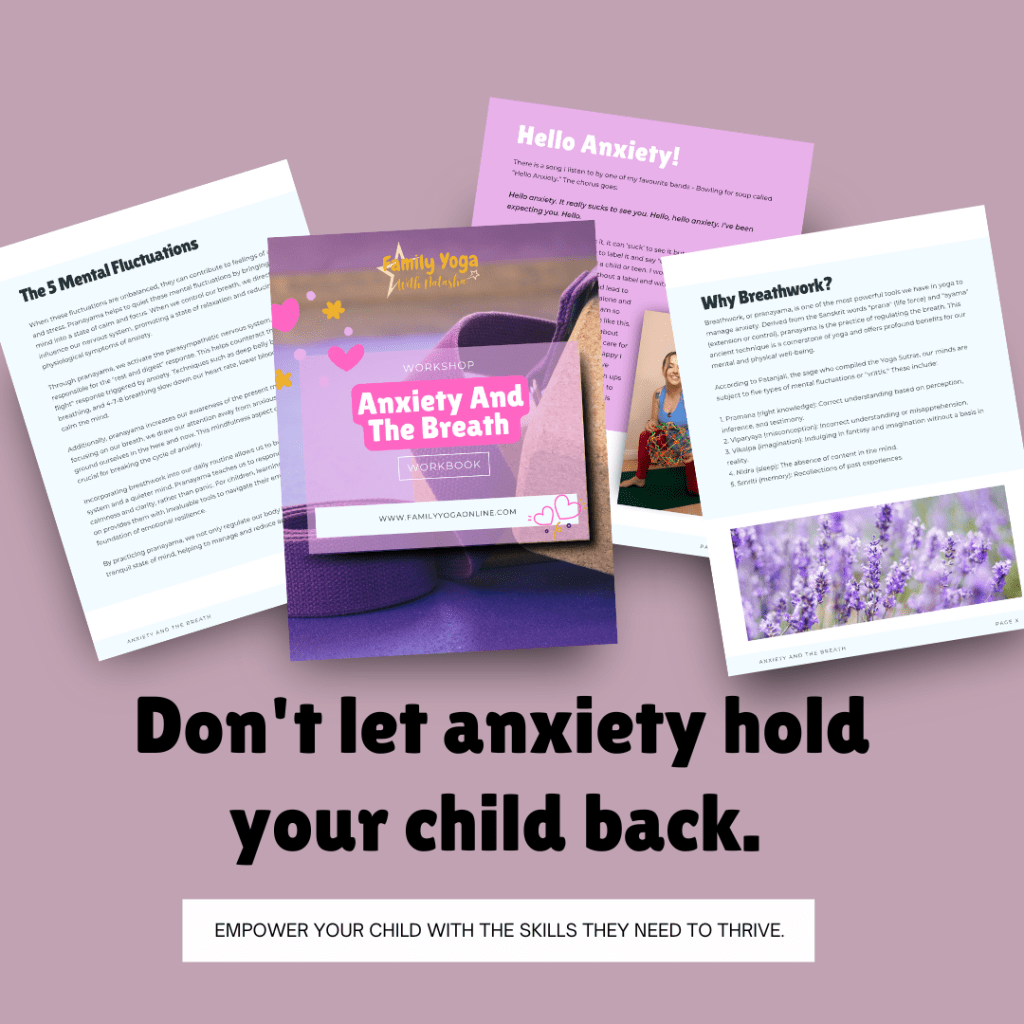
Want to learn more about anxiety and the breath? Want to learn how you can support your child effectively with building a relationship with their breath so that they can start emptying their stress bucket.
You need to be inside this workshop and get my Anxiety and The Breath Workbook!
Leave a comment below if you’ll be trying this activity with the children in your life!

[…] body is not separate from the mind or spirit, it’s part of a larger system that includes the koshas…
[…] both feel when a big emotion comes: “I am feeling overwhelmed right now. I’m going to try bumblebee breath…
[…] terms of yoga it all comes down to the Kosha System. This is 5 layers of our being that…
[…] emotions feel overwhelming, simple breathwork—like extending my exhales or practicing Bee Breath (Bhramari)—helps shift my nervous system from fight-or-flight…
[…] To learn more about the Koshas check out this previous post: What are the Koshas? Understanding these 5 layers…
The 10‑Minute Bedtime Bridge That Transforms Chaotic Evenings into Calm
Because stressful nights don’t need to end in battles (or guilt). Real Talk: Messy Bedtimes Happen Let’s be honest… I am not the mum who has her evenings perfectly organised, where the kids calmly go to bed at 7 p.m. and I get this magical “me time” after. Nope. Sometimes it’s 9 p.m. and no one’s in…


I don’t always want to practice Yoga with my Children
This might surprise you, especially coming from someone who talks about yoga together sooo much, but I don’t always want to practice yoga with my children. And sometimes… they don’t want to practice with me either. The other day, I rolled out my mat ready for my own practice. And like a moth to a…
Why “Just Take a Deep Breath” Often Doesn’t Work (And What Actually Helps)
“Take a deep breath.” It’s one of the most common pieces of advice we hear…. to support children and ourselves, told to anyone who looks overwhelmed, angry or having a tough time. And while it’s usually said with care, compassion, and good intention… it so often falls flat. You’ve probably seen it.You suggest a deep…
 Family Yoga with Natasha
Leave a comment