Helping kids navigate big emotions isn’t just about staying calm in the heat of the moment. True emotional regulation is a skill that’s built over time—before the meltdowns happen. And one of the most effective ways to teach these skills? Play.
Inside Family Yoga Game Night, we use three key types of games to support kids in developing self-regulation, reducing overwhelm, and creating deeper connection.
Let’s dive into why these games work and how they can help your child.
1. High Energy /Movement-Based Yoga Games
Why they work: Some kids need movement to regulate their nervous system. They’re sensory seekers, they have big energy, and trying to get them to “calm down” by sitting still just doesn’t work. Movement-based games meet them where they are, helping them release energy before slowing things down.
Example: Yoga Freeze Dance
Dancing is such a great way to move our bodies. This game helps with self-regulating because the children go from moving around and using up lots of energy to having to freeze completely still! We are using up-regulating techniques to either help children with excess energy or give children with low energy a lift.
For this game I like to select some music that the kids enjoy, and we dance freely to the music. I then pause the music at random intervals, and everyone must freeze. I like to add some yoga into this game by having everyone freeze in a certain yoga pose or choose their own.
Poses that work well with this game are mountain pose and tree pose. You can also play around with different speeds – faster music and slower calmer music. This can help with regulating the speed of movements.
👉 Calm doesn’t just happen with practices that look calm. Sometimes, the body needs to move first before it can settle. Much like in our adult yoga classes when we work towards a peak pose and then slow things down and end in savasana.
2. Calm & Grounding Games
Why they work: Connection is at the heart of co-regulation. Slower-paced, grounding games bring kids into a state of safety and security, helping them down-regulate their nervous system after big emotions or busy days.
Example: Draw a Pose
For this game you will need a dice.
Each person will need a piece of paper and a pen/ pencil. Each number has a body part assigned to it. Everyone takes turns to roll the dice and which ever number they get, they alone get to draw the body part that goes with that number.
The aim is to finish drawing our person and hey, maybe they are practicing yoga too!
We usually draw stick people as it is quick and easy, but I have seen some impressive doodles! There is no limiting creativity. The aim of the game is to complete your person by getting the numbers you need.
1 – Head and neck
2 – Arm
3 – Leg
4 – Body
5 – Foot
6 – Hand
For example, if you roll a two, you get to draw one arm. This means to complete your stick person you will need to roll a two twice. If you then roll a two three times, you do not need to draw a third arm so you just pass the dice along and wait for your next turn.
Those who know me will know I like to keep competition out of my classes and yoga sessions, this one is semi-competitive but we’ve always had a lot of fun playing and always let everyone finish their doodles. The focus isn’t really on winning then but showing everyone their picture.
👉 These games give kids (and parents!) permission to slow down and feel supported.
3. Mindfulness & Sensory-Based Games
Why they work: Kids, especially those who are highly sensitive or sensory sensitive, often need specific tools to help them feel safe in their environment. Mindfulness and sensory games help children become more aware of their body, emotions, and surroundings in a way that feels fun and engaging.
Example: Beans and Rice
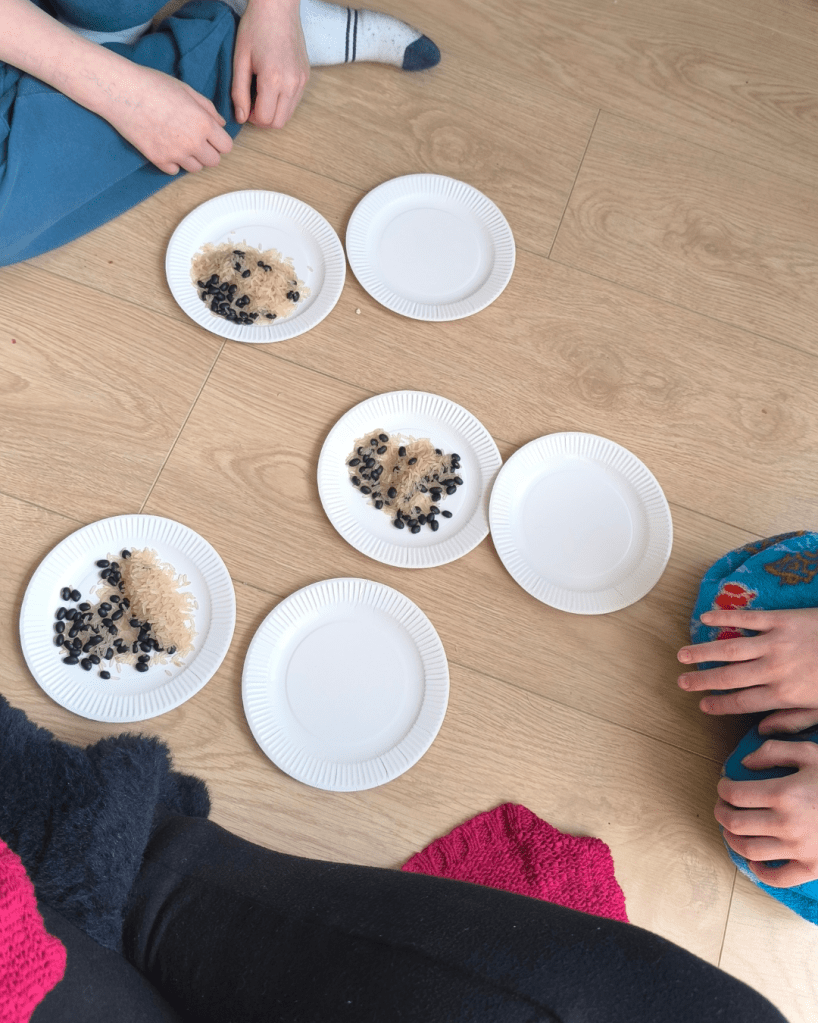
1️⃣Mix dry, uncooked rice and beans in a bowl.
2️⃣Close your eyes and separate the rice from the beans.
I used paper plates, they had two each and on one of the plates were the mix of rice and beans, and then they moved the beans to the other paper plate.
This simple practice helps focus the mind and helps with emotional regulation (bonus: it’s oddly satisfying!)
👉 When kids learn to notice how they feel without judgment, they gain powerful tools for emotional regulation.
Bringing It All Together Inside Family Yoga Game Night
When you combine these three types of games, you create a regulation practice that actually works. Not just in the calm moments—but in the real, messy, overwhelming ones too.
Inside Family Yoga Game Night, you’ll get:
✔️ A collection of themed game guides with a mix of movement, calming, and mindfulness-based activities (we highlight one each month)
✔️ Simple, playful ways to teach emotional regulation (without forcing “calm” in the moment)
✔️ A fun, low-pressure way to bring yoga into your family’s life
Doors are closing soon! Don’t miss out on this chance to build emotional regulation together—in a way that feels fun and natural.
Join us here 👉 Family Yoga Game Night

 Family Yoga with Natasha
Leave a comment